


Root Canal Therapy
What is a root canal?
A root canal is one of the most common dental procedures performed, well over 14 million every year. This simple treatment can save your natural teeth and prevent the need of dental implants or bridges.
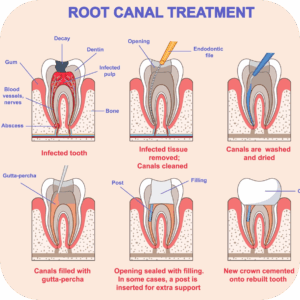
At the center of your tooth is pulp. Pulp is a collection of blood vessels that helps to build the surrounding tooth. Infection of the pulp can be caused by trauma to the tooth, deep decay, cracks and chips, or repeated dental procedures. Symptoms of the infection can be identified as visible injury or swelling of the tooth, sensitivity to temperature or pain in the tooth and gums.
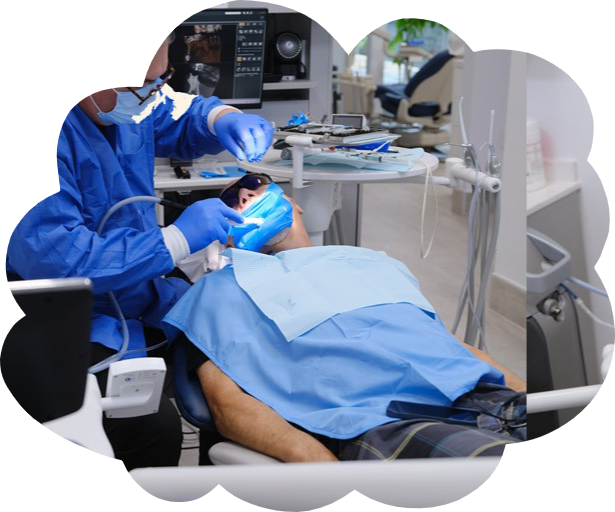
If you experience any of these symptoms, your dentist will most likely recommend non-surgical treatment to eliminate the diseased pulp. This injured pulp is removed and the root canal system is thoroughly cleaned and sealed. This therapy usually involves local anesthesia and may be completed in one or more visits depending on the treatment required. Success for this type of treatment occurs in about 90% of cases. If your tooth is not amenable to endodontic treatment or the chance of success is unfavorable, you will be informed at the time of consultation or when a complication becomes evident during or after treatment. We use local anesthesia to eliminate discomfort. In addition, we will provide nitrous oxide analgesia, if indicated. You will be able to drive home after your treatment, and you probably will be comfortable returning to your normal routine.
What happens after treatment? When your root canal therapy has been completed, a record of your treatment will be sent to your restorative dentist. You should contact their office for a follow-up restoration within a few weeks of completion at our office. Your restorative dentist will decide on what type of restoration is necessary to protect your tooth. It is rare for endodontic patients to experience complications after routine endodontic treatment or microsurgery. If a problem does occur, however, we are available at all times to respond. To prevent further decay, continue to practice good dental hygiene.
How much will it cost? The cost associated with this procedure can vary depending on factors such as the severity of damage to the affected tooth and which tooth is affected. In general, endodontic treatment is much less expensive than tooth removal and replacement with an artificial tooth.
Root Canal Safety
The relationship of our teeth and mouth to overall good health is indisputable. Endodontics plays a critical role in maintaining good oral health by eliminating infection and pain, and preserving our natural dentition.
A key responsibility of any dentist is to reassure patients who are concerned about the safety of endodontic treatment that their overall well-being is a top priority. The American Association of Endodontists website (www.aae.org) is the best place for anxious patients to obtain comprehensive information on the safety and efficacy of endodontics and root canal treatment.
While plenty of good information is available online from the AAE and other reliable resources, patients sometimes arrive in the dental office with misinformation. This has occurred with the long-dispelled “focal infection theory” in endodontics, introduced in the early 1900s. In the 1920s, Dr. Weston A. Price presented research suggesting that bacteria trapped in dentinal tubules during root canal treatment could “leak” and cause almost any type of generative systemic disease (e.g., arthritis; diseases of the kidney, heart, nervous, gastroinestinal, endocrine and other systems). This was before medicine understood the causes of such disease.
Dr. Price advocated tooth extraction—the most traumatic dental procedure—over endodontic treatment. This theory resulted in a frightening era of tooth extraction both for treatment of systemic disease and as a prophylactic measure against future illness. Dr. Price’s research techniques were criticized at the time they were published, and by the early 1930s, a number of well-designed studies using more modern research techniques discredited his findings.
Decades of research have contradicted Dr. Price’s findings since then. In 1951, the Journal of the American Dental Association published a special edition reviewing the scientific literature and shifted the standard of practice back to endodontic treatment for teeth with non-vital pulp in instances where the tooth could be saved. The JADA reviewed Dr. Price’s research techniques from the 1920s and noted that they lacked many aspects of modern scientific research, including absence of proper control groups and induction of excessive doses of bacteria.
More recent research continues to support the safety of dental treatment as it relates to overall systemic health. In 2007, the American Heart Association updated its guidelines on the prevention of infective endocarditis, drastically curbing the indications for premedication for dental procedures and excluding endodontic treatment from dental procedures requiring premedication. In April 2012, the AHA found no scientific evidence linking periodontal disease and heart disease, concluding that heart disease and periodontal disease often coincidentally occur in the same person due to common risk factors of smoking, age and diabetes mellitus.
Decades of research contradict the beliefs of “focal infection” proponents; there is no valid, scientific evidence linking endodontically treated teeth and systemic disease. Yet some patients still hear about this long-dispelled theory.

Myths About Root Canal Treatment
When it comes to root canals, many people are still operating under outdated and often frightening information. Modern dentistry has transformed this procedure, making it far more comfortable and effective than its reputation suggests. Let’s separate fact from fiction regarding root canals and the pain associated with them.
Myth #1: Root canal treatment is an excruciatingly painful procedure.
The Truth: Root canal treatment doesn’t cause pain—it relieves it. The severe pain that leads a person to need a root canal is caused by an infection or inflammation within the tooth’s pulp. The procedure itself, thanks to modern anesthesia, is no more uncomfortable than getting a standard filling. Endodontists, who are root canal specialists, are experts in pain management and can ensure you are comfortable throughout the process. In fact, a survey by the American Association of Endodontists found that patients who have experienced a root canal are six times more likely to describe it as “painless” than those who haven’t.
Myth #2: It’s better to just pull the tooth than get a root canal.
The Truth: Saving your natural tooth is always the best option whenever possible. Nothing can completely replicate the function and feel of a natural tooth. Extracting a tooth can lead to other dental problems, such as surrounding teeth shifting, and may require more expensive and time-consuming treatments like a bridge or an implant to replace it. A root canal saves the natural tooth, allowing it to function for a lifetime with proper care.
Myth #3: Root canals can make you sick.
The Truth: This myth is based on a century-old, flawed research study that has been thoroughly debunked. There is no valid scientific evidence linking root canal-treated teeth to diseases or illnesses elsewhere in the body. In fact, a root canal is a safe and effective procedure designed to eliminate bacteria from an infected tooth, preventing that infection from spreading and causing further health problems.
Periodontic
Protect your gums and teeth with expert periodontal care and gum disease treatment in Laguna Beach.
Orthodontic
Straighten your smile with clear aligners or braces from Laguna Beach’s trusted orthodontic specialist.
Endodontic
Save your natural teeth with expert, pain-free root canal therapy in Laguna Beach by Dr. Farsio.
New Dental Clinic
Now open in Laguna Beach—expert endo, ortho, and perio care from trusted dental specialists.